
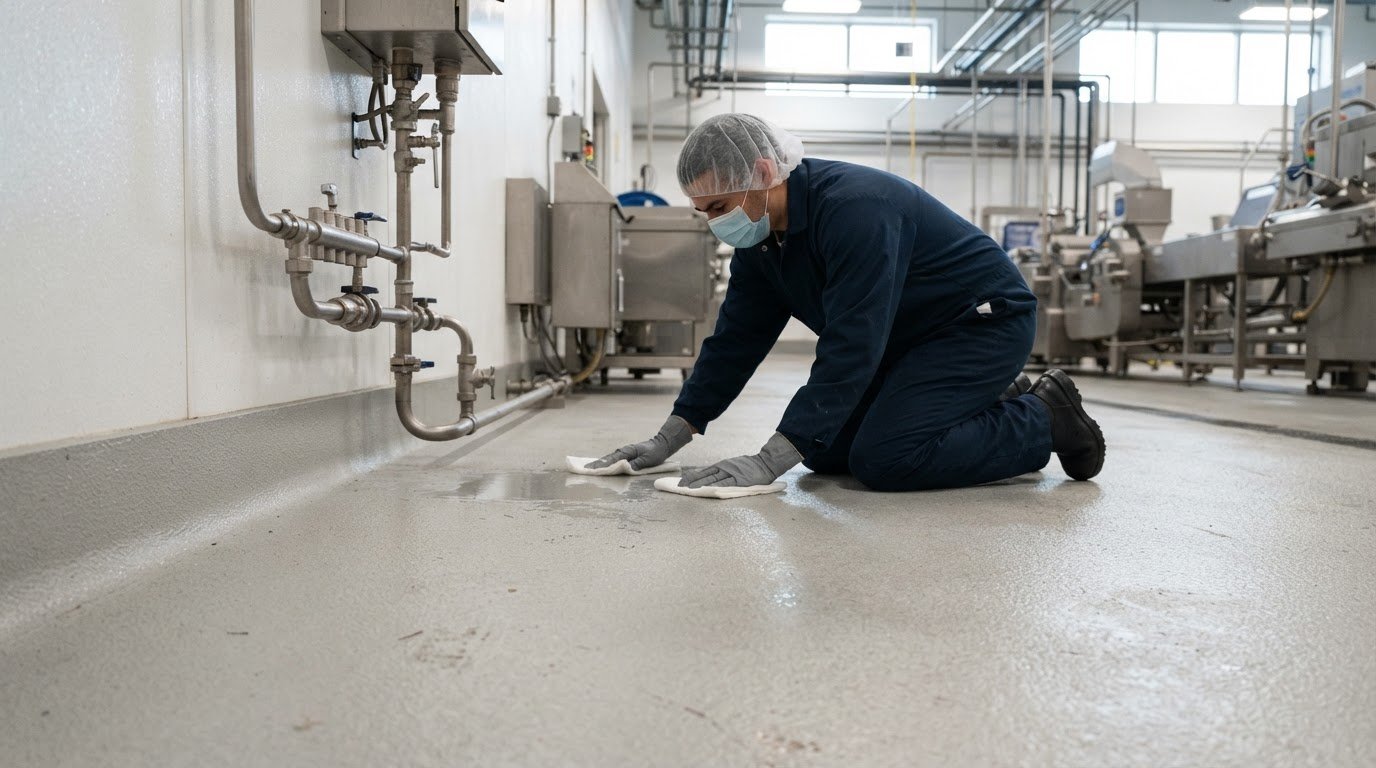
Concrete needs protection suited to the chemicals, traffic and conditions it faces. Knowing how to protect concrete from chemical spills starts with selecting a suitable coating or sealer and cleaning spills promptly. A surface treatment can help limit penetration, but it does not replace cleanup.
In Canadian facilities, floors may face chemicals alongside vehicle traffic, moisture and seasonal conditions. A coating that does not suit the exposure can leave concrete vulnerable; a properly selected system helps protect the surface from spills and wear.
This guide explains how coatings and sealers protect concrete, what can contribute to deterioration, and how chemical exposure and traffic affect system choice. It also covers the limits of surface protection, so you can identify when a coating is appropriate and when the concrete needs attention first.
Key Takeaways
- Epoxy coatings form a surface barrier, while sealers can limit liquid and contaminant entry. Neither can stabilize concrete that is already compromised.
- Match floor protection to the chemicals present and the level of traffic; high-traffic coatings may need recoating every two to three years.
- Penetrating sealers work within concrete’s pores, while partial-surface sealers create a barrier at the surface. The right option depends on the exposure and the protection needed.
- Industrial protection must account for specific hazards, including chlorides from de-icing salts or marine environments, which can reach reinforcing steel and contribute to corrosion.
What Is Concrete Protective Coating?
Protecting concrete from chemical spills starts with matching the barrier to the liquid and floor conditions. Coatings form a protective surface layer, while sealers can limit liquid entry into concrete pores.
Coatings as Liquid and Contaminant Barriers
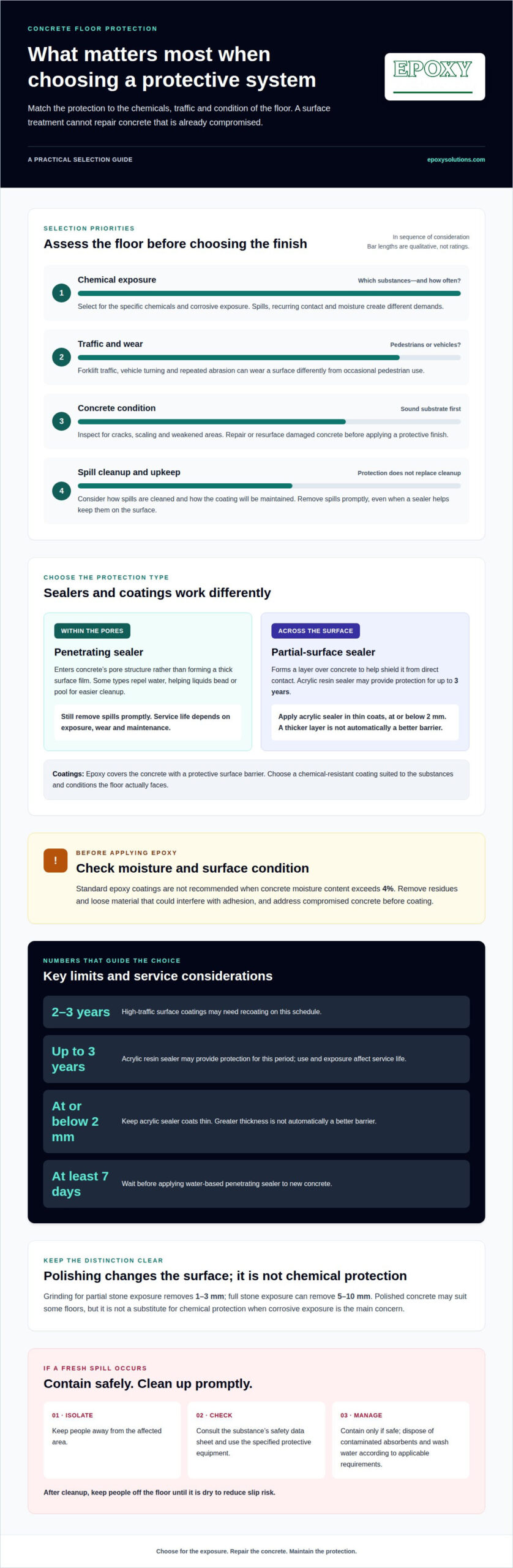
Epoxy coatings cover concrete, while concrete sealers can reduce the entry of liquids and contaminants. That barrier can make spills easier to manage, but it doesn’t replace prompt cleanup. Before application, remove residues and loose material that could interfere with adhesion. Check moisture conditions as well: standard epoxy coatings are not recommended when concrete moisture content exceeds 4%. The floor’s condition also matters, because surface protection doesn’t repair underlying damage.
Chemical Resistance and Corrosive Exposure
Chemical-resistant coatings are selected for the substances and corrosive exposure a floor faces. A chemical plant, for example, may need protection suited to its process chemicals. In Canada, reporting and cleanup obligations depend on the substance, release and applicable federal, provincial or territorial requirements. For a fresh spill, isolate the area and consult the substance’s safety data sheet before cleanup. Use the specified protective equipment, contain the spill only if it is safe, and dispose of contaminated absorbents and wash water according to applicable requirements.
Substrate Condition and Coating Limitations
A coating protects the surface but cannot stabilize compromised concrete beneath it. Before applying a finish, inspect for cracks, scaling or weakened areas; repairs or resurfacing may be needed first. Inspections can identify deterioration that routine cleaning may not reveal. Protecting concrete from chemical spills means assessing the substrate as well as the exposure: a coating over unsound concrete will not fix the underlying problem.
After cleanup, keep people off the affected floor until it is dry to reduce slip risk. Match the coating to the actual chemical exposure, then maintain the surface using cleaning methods suited to its protective system.
Choosing protection by traffic and exposure
Concrete floors face different combinations of chemical contact, foot traffic and vehicle loads. Choose a protective system by matching those exposures to the floor’s condition and intended use.
Sealers Against Chemical Exposure
Concrete sealers can reduce liquid and contaminant entry, helping protect cement-based surfaces from exposure. A penetrating sealer may leave spills pooled on the surface for easier cleanup, but prompt removal is still necessary. Consider which chemicals are present, how often contact occurs and how spills are cleaned. These factors determine whether a sealer provides suitable protection or a more substantial barrier is needed.
Concrete Under Chemical Attack
Chemical attack occurs when substances damage concrete or its reinforcing steel. Chemical plants, sewer systems and wastewater treatment plants can face this exposure and may need special coatings. The right protection depends on the specific chemicals and operating conditions, not simply the building’s industry. Spills, recurring contact and moisture create different demands, so assess the exposure before selecting a system.
Traffic matters too. A floor crossed by forklifts faces different wear from one used occasionally by pedestrians. In high-traffic areas, surface coatings may need recoating every two to three years. Vehicle turning, repeated abrasion and spill frequency all affect the demands on the surface. Repair damaged concrete before choosing a protective finish.
Polishing changes the surface rather than adding a chemical-resistant coating. Grinding for partial stone exposure removes 1-3 mm; full stone exposure can remove 5-10 mm. That distinction affects how much concrete is removed and which aggregate becomes visible. Polished concrete may suit some floors, but it isn’t a substitute for chemical protection where corrosive exposure is the main concern.
For floors where chemical contact drives the decision, chemical-resistant flooring can provide a system matched to that exposure.
Why Sealing Concrete Surfaces is Essential?
Concrete pores and voids form during cement hydration, creating routes for water and dissolved contaminants to enter. Sealing reduces this exposure, but the right treatment depends on whether the floor needs protection within its pores or across its exposed surface.
Penetrating sealers enter the pore structure rather than forming a thick surface film. Some repel water, helping liquids bead instead of soaking in. Spills may stay pooled for easier cleanup, but still need prompt removal. Most penetrating concrete sealers last several years, not permanently. Their service life depends on exposure, wear and maintenance, so inspect for signs that water repellency has declined.
Partial-surface sealers form a layer over concrete, helping shield it from direct contact. Acrylic resin sealer may provide protection for up to 3 years, while use and exposure affect how long coloured versions last before reapplication. Applying acrylic sealer in thin coats matters: keep its thickness at or below 2 mm. A thicker layer isn’t automatically a better barrier.
Water-based penetrating sealer needs suitable timing on new concrete. Wait at least 7 days before applying it, allowing the surface to develop before treatment. Water-repellent sealers work by creating a hydrophobic effect in concrete pores, limiting water uptake. They don’t make a floor permanently impermeable, and chemical resistance depends on the specific sealer and exposure.
Assess natural oil sealers according to their intended use; do not assume they offer the same protection as penetrating or film-forming sealers. For example, an oil treatment intended to alter appearance is not automatically suitable for chemical spills. Match the product’s stated use to the liquid, traffic and cleaning conditions. The word “sealer” alone does not establish chemical resistance.
Before applying a sealer, clean the concrete and remove residues that could interfere with coverage. A pH-neutral cleaner and soft microfiber mop are suitable for routine cleaning of sealed floors. After a spill, let the area dry completely to reduce slip risk, then assess whether wear or exposure calls for renewed protection.
Choosing industrial concrete protection for the chemicals and conditions involved
Industrial protection starts with the exposure, not a generic coating label. Identify the chemicals, moisture, traffic and cleaning methods that affect each floor. A wastewater treatment area, for example, faces different demands from a dry warehouse. The finish must suit both the actual conditions and the concrete’s existing state.
Chlorides deserve particular attention in Canada. De-icing salts and marine saltwater can penetrate porous concrete and damage the passivation film around reinforcing steel, triggering pitting corrosion. Freeze-thaw cycles can also cause surface scaling in poor-quality concrete, and chlorides can accelerate the damage. A protective system should address both chemical exposure and the moisture pathways that carry contaminants into the structure.
Other reactions matter. Carbonation occurs as carbon dioxide reacts with calcium hydroxide in concrete’s pore liquid, forming calcium carbonate. If carbon dioxide or chlorides reach reinforcing steel, they can damage its protective layer. Wet-dry cycles accelerate corrosion. In areas under continuous moisture pressure, untreated concrete may weaken from within over 5 to 10 years.
Inspect the substrate before selecting a finish. Map cracks, scaling and areas where moisture enters, then determine whether repairs are needed first. Polymer coatings can seal hairline cracks where temperature changes cause movement, while polymer-modified cementitious coatings can protect concrete exposed to or immersed in water. Each addresses a different condition; neither is a universal solution.
For reinforcing steel at risk, corrosion inhibitors may be selected as passive or active systems based on exposure, environment, concrete quality and cover. Cathodic protection uses a sacrificial metal anode or applied current to keep steel cathodic inside concrete. These measures address corrosion mechanisms, while coatings limit exposure at the surface. Keep the distinction clear when planning protection.
For an industrial floor exposed to chemicals and moisture, discuss tailored concrete floor protection as part of the protection plan.
Epoxy Solutions™: Chemical Resistance Flooring
Epoxy Solutions™ installs chemical-resistant flooring and epoxy coatings for concrete floors exposed to chemical spills and demanding traffic. The right system depends on the chemicals present, how often exposure occurs, moisture conditions and the concrete’s condition. Assess these factors to determine whether a coating suits the floor’s actual use.
When planning a new finish, identify the chemical exposure, traffic and cleaning conditions to guide the flooring choice. Damaged concrete needs attention before a coating can protect the surface; a coating will not stabilize compromised concrete. Polished concrete serves a different purpose and is not a substitute for chemical resistance where corrosive spills are the main concern.
Contact Epoxy Solutions™ to discuss chemical-resistant flooring for your facility.
Plan the Next Flooring Decision
A sound plan for protecting concrete from chemical spills starts with the floor’s role in daily operations. Identify the substances present, how traffic moves through the area and the conditions the surface faces. This gives the flooring decision a clear purpose instead of treating every concrete floor the same.
Epoxy Solutions™ installs epoxy coatings, UV-resistant flooring and anti-static flooring for different facility needs. The right system depends on the space’s performance requirements, including chemical exposure and operating conditions. Clear priorities help align the flooring system with the way your facility works.
Bring those priorities into a conversation about your floor’s needs. Contact Epoxy Solutions™ to discuss your flooring project and take a practical next step toward protecting your facility.
Frequently Asked Questions
How Do You Keep Concrete From Deteriorating?
Limit the moisture and contaminants that reach concrete, and address surface damage before it spreads. In Canada, rinse de-icing salt residue from exposed concrete with clear water to reduce freeze-thaw damage. Chlorides can penetrate concrete and contribute to reinforcing steel corrosion, while carbonation can also affect the steel’s protective layer. Regular inspections help identify scaling, cracks and other changes that may need repair.
How often should concrete floors be resealed?
Resealing depends on the sealer type, floor traffic and exposure. Coloured concrete sealers may need reapplication after 2-5 years, while acrylic resin sealer may protect for up to 3 years. Most penetrating sealers last several years. Treat these as different product categories, not a single schedule: inspect for changes in water repellency, wear and spill behaviour, then base maintenance on the sealer and floor conditions.
Which chemicals damage concrete, and how quickly can they cause damage?
Acids and chloride-bearing liquids can threaten concrete or reinforcing steel, while the time to visible damage depends on the chemical and exposure conditions. A brief spill is not the same as repeated contact. Chlorides can penetrate concrete and damage the protective passivation layer on reinforcing steel; wet-dry cycles accelerate corrosion. Carbonation also changes concrete’s chemistry. Prompt cleanup limits contact, but surface appearance alone may not reveal underlying effects.
Which concrete sealers or coatings resist acids, solvents, oils, and alkalis?
Do not assume a single sealer resists every acid, solvent, oil and alkali. Epoxy and polyurethane coatings can resist oil, tire marks and chemicals on garage floors, while industrial chemical-resistant coatings are selected for the specific exposure. Match the system to the substances and operating conditions. A general-purpose water-repellent sealer limits water uptake, but that alone does not establish resistance to specific chemicals.
How to choose between epoxy, polyurethane, and chemical-resistant concrete coatings?
Choose a system based on chemical exposure, traffic and floor conditions, rather than material name alone. Epoxy coatings can withstand heavy traffic and chemical and oil spills; epoxy or polyurethane systems resist oil, tire marks and chemicals on garage floors. A chemical-resistant coating must suit the substances contacting the surface. Consider whether spills are occasional or routine, and whether vehicle traffic or moisture adds another demand.
How often should protective concrete coatings be inspected and reapplied?
Inspect coatings regularly for wear, lifting, cracks or areas where concrete becomes exposed. High-traffic surface coatings may need recoating every two to three years, while epoxy coatings normally need maintenance every 2-5 years. These intervals describe different conditions and aren’t interchangeable schedules. Traffic intensity, chemical contact and cleaning all affect coating wear. Repairing compromised concrete before recoating helps prevent defects beneath the new surface layer.